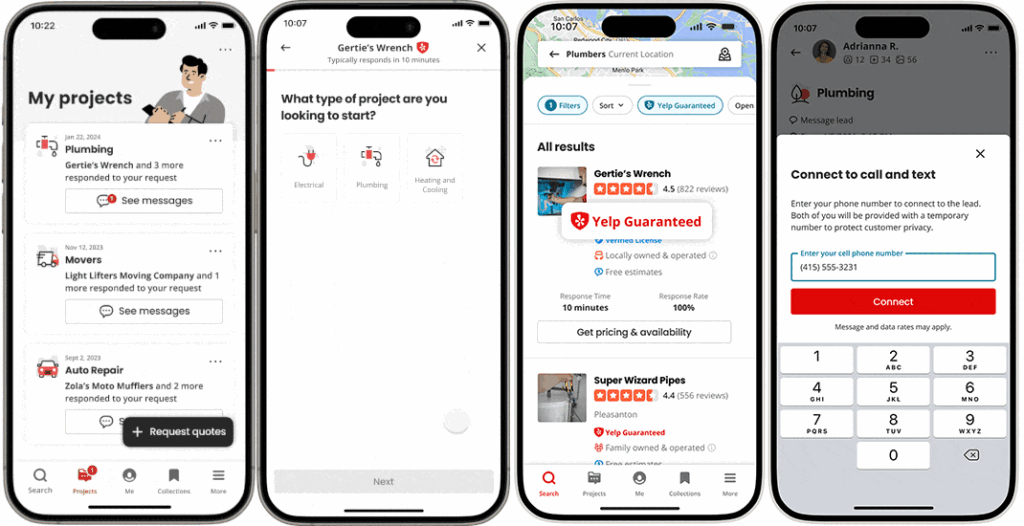
We’ve all been there. You’re right in the middle of finishing up a job site in Clovis or grabbing a quick lunch downtown, and your phone rings. It’s an incredibly enthusiastic Yelp salesperson offering you a “$300 free ad credit” and promising that thousands of Fresno homeowners are actively searching for your exact services right this second. It sounds like a no-brainer, right? But for most local contractors, plumbers, and HVAC pros in the Central Valley, flipping that paid ad switch feels less like unlocking a flood of new business and more like throwing cash directly into a leaf blower.
Before you hand over your hard-earned marketing dollars, let’s look at why the platform behaves the way it does—starting with the fundamental glitch in how people actually use the app.
1. The “Diner Mindset” vs. The “Oh No, My House Is On Fire” Mindset
To figure out why your Yelp ad budget disappears faster than a cold drink in a Fresno July, we have to look at how people actually use the app. There are two completely different vibes when someone pulls out their phone: the Diner Mindset and the Emergency Service Mindset.
Yelp was built by, and for, people with the Diner Mindset.
Think about how you use it. It’s Friday night, you’re starving, and you want to see if there’s a new taco truck parked in the Tower District, check out the patio situation in River Park, or scroll through photos of the best tri-tip sandwich in Fresno. You want to window-shop. You want to look at pictures of food, read juicy gossip in the review section, and casually compare four different spots. The whole point of the app is to swipe around and kill time.
But if you run an HVAC company, plumbing business, or electrical crew, your target customer is having a completely different kind of day. They are trapped in the Emergency Service Mindset.
Imagine a homeowner over off Herndon Avenue. It’s mid-August, the thermostat is screaming 108°F, and their AC unit just gasped its last breath of cold air.
That person is not “window-shopping.” They don’t care about a 500-word review from three years ago praising how nice your office manager is, and they definitely don’t want to flip through a photo album of your freshly washed service trucks. They have exactly one goal: Find a licensed human being who can stop them from melting.
When people are sweating or staring at a flooded bathroom, they don’t open Yelp to browse. They open Google, type in “AC repair Fresno” or “clogged drain Clovis,” and call the very first name with a green checkmark and a massive “Call Now” button.
The Moral of the Story: When you pay for Yelp ads as a home service business, you’re basically paying premium rates to pitch emergency heart surgery to people who just logged on to find a good burrito.
2. The Cost-Per-Click Math and the “Request a Quote” Trap
Now let’s look at how Yelp charges you to hang out in their foodie app. They use a Cost-Per-Click (CPC) system. Translation: every single time a user accidentally or purposefully taps your business name while scrolling, Yelp takes a bite out of your wallet—whether they actually call you, or immediately exit because they realized you don’t drive out to Madera.
In competitive trades around the Central Valley, those clicks are pricey. We are talking anywhere from $8 to $18 per tap.
Let’s do some quick back-of-the-napkin math:
  10 Clicks on your shiny Yelp Ad
x $12 Average cost for that single tap
=======================================
  $120 Poof. Gone from your budget.
If all 10 of those people called your shop, you’d be buying a round of drinks to celebrate. But Yelp has a little feature built into their app that turns this into a total headache: The “Request a Quote” button.
When a user lands on your page, Yelp practically begs them to hit that button. The customer types out their issue (like, “My garbage disposal is making a scary grinding noise”). But right before they hit send, a sneaky little pop-up appears with a bunch of pre-checked boxes that says: “Hey, want to send this exact same message to 4 other local pros, too?”
And just like that, the user clicks “Yes,” and their project is blasted to you and four of your fiercest competitors in town.
So, you just paid $12 for a click, but instead of an exclusive lead, you’ve been dropped into a frantic, digital hunger games. Now you’re racing to reply within 90 seconds just to compete on price against some unlicenced guy working out of the back of a hatchback who doesn’t pay for insurance or local permits.
The Reality Check: You are paying premium ad dollars to be entered into a price-war lottery. If you aren’t glued to your phone to answer that Yelp message instantly, that $12 click was basically a donation to tech executives.
3. The “Not Recommended” Review Filter Paradox
Let’s address the massive elephant in the room that makes every Fresno business owner want to rip their hair out: the infamous Yelp review filter.
You know exactly what I’m talking about. You do an incredible job for a client over near Fresno State. They are so thrilled they log on and write you a glowing, five-star review detailing how you saved their weekend. You feel like a champion. Then, forty-eight hours later, you check your page and… poof. It’s gone. It’s been banished to the gray, shadowy graveyard at the bottom of your page labeled “Reviews that are not currently recommended.”
Meanwhile, a weird, angry one-star review from some guy named “Chad B.” who complained that your technician didn’t take his shoes off fast enough back in 2021 remains proudly pinned to the top of your profile.
When you complain to a Yelp rep, they’ll give you a highly polished speech about their “automated software protecting consumers.” But then comes the subtle, unspoken pitch: “By the way, if you signed up for our paid advertising package, we could help boost your visibility…”
Let’s clear this up right now: Paying for Yelp ads does not fix your review filter.
They will gladly take your $500 a month for ads, but your legitimate, hard-earned five-star reviews from real Central Valley residents will stay trapped in jail unless those specific customers review restaurants three times a week. You’re essentially paying to drive traffic to a profile that Yelp’s own algorithm is actively kneecapping.
The Reality Check: Buying ads on a platform while your best reviews are hidden is like paying to put up a billboard on Highway 41, but letting someone spray-paint over your phone number.
4. Where to Actually Put Your Money (Without Feeling Scammed)
Look, we aren’t saying you should delete your Yelp account. Keep your free profile open, upload some nice photos of your crew, and if a customer happens to find you there organically, awesome. But stop feeding the paid ad machine.
If you want to stop burning cash and actually book high-ticket jobs in Fresno, Clovis, and Madera, here is where your marketing budget belongs:
Option A: Google Local Services Ads (LSAs)
These are the holy grail for home service pros. When someone searches “Emergency Plumber Fresno,” these are the ads at the very top of the page with the green “Google Screened” badge. The best part? You pay per actual phone call, not per click. If someone clicks your name, looks at your license, and changes their mind without calling, it costs you exactly zero dollars. You only pay when a real breathing human is on the line talking to your dispatcher.
Option B: Claiming Your Google Business Profile (For Free)
Before you spend a dime on any platform, optimize your free Google map listing. Fill out your service areas explicitly (tell Google you go out to Sanger, Selma, and Kingsburg!). Get your actual local clients to leave reviews there. Google’s map pack is the prime real estate for the “Emergency Mindset” buyer.
Option C: Hyper-Local Facebook & Instagram Ads
Instead of fighting for leads in a crowded price-war lottery, use social media ads to build a brand before the emergency happens. Run a funny, engaging video ad targeted at local homeowners showing your team fixing a common Valley issue (like preparing an AC unit for a 115-degree heatwave). That way, when their unit inevitably acts up, your name is the first one they think of.
The Bottom Line
At the end of the day, your marketing budget should feel like an investment, not a monthly tax you pay to a tech giant just to stay visible. If you are tired of playing digital hunger games and want to build a marketing system that actually targets ready-to-buy customers right here in the Central Valley, let’s chat.
We promise no high-pressure sales pitches—just honest, local strategy. (And we won’t hide your good reviews, either.)